RFID BAGGAGE TRACKING SYSTEM

ACUBE RFID BAGGAGE TRACKING SYSTEM Saudi Arabia

Radio-frequency identification (RFID) baggage tracking systems are used to track and locate luggage or other baggage items at airports and other transportation centers.ACUBE RFID baggage monitoring system is a strong, dependable, and cost-effective technology that uses radio frequency identification (RFID) to track suspected baggage. RFID luggage tags can be personalized and used to identify the luggage of travellers in airports.  ACUBE RFID baggage tracking solution transmits real-time luggage information from check-in to loading and flags any inconsistencies discovered from boarded passenger data by combining Barcode and RFID technologies. An innovative luggage tracking technology that provides exceptional solutions to assure the entire safety of your things.
ACUBE RFID luggage tags enable a sustainable, cost-effective, customer-centric baggage operation with fully operational simplicity that minimizes human intervention throughout the baggage journey. As we can see, RFID baggage monitoring is a multifaceted and sophisticated process that begins with passenger reporting at airports, and the possibility of mishandling or inaccuracies inherent in human participation is unavoidable. ACUBE overcomes this by providing advanced RFID baggage tracking and other services. ACUBE RFID luggage tracking system is meant to provide end-to-end surveillance of all luggage movements, including suspected baggage tracking, using intelligent RFID technology-powered database management and specifically engineered RFID checkpoints. At ACUBE, you can be confident that the complete RFID luggage tracking system interface will improve your operations by encompassing all aspects and data that need to be tracked. By utilizing RFID luggage tracking provided by ACUBE, it eliminates system outages by providing extraordinarily accurate tracking information and automatic monitoring. It may also be upgraded for further compatibilities and new scan locations.
rfid solution providers

HOW DOES OUR SOLUTION WORK?

Baggage tracking systems are used to keep track of the movement of luggage from the point of check-in to the final destination. These systems typically use barcode technology to identify and track bags as they move through the airport.

Here’s how it works:

  • At check-in, a luggage tag with a unique barcode is attached to each piece of luggage. The barcode contains information about the passenger and their flight itinerary.
  • When the luggage is placed on the conveyor belt at the airport, it is scanned by a barcode reader. This records the luggage’s location and updates the baggage tracking system.
  • As the luggage is moved through the airport, it is scanned at various points along the way. This updates the location of the luggage in the tracking system and ensures that it is being routed to the correct destination.
  • If the luggage is misrouted or lost, the tracking system can be used to locate it and get it to the correct destination.


RFID Tags for Luggage: The Smart Way to Travel Hassle-Free

Having your bags delivered safely and on schedule is no longer a luxury but a necessity. With an increasing number of travelers and baggage loss incidents reported at airports worldwide, RFID luggage tags are transforming the smart travel experience. These intelligent RFID baggage tags ensure real-time tracking, higher security, and confidence, thereby becoming the next-generation intelligent travel.

Irrespective of whether you are a regular tourist, a logistics supervisor, or a Saudi Arabian airport official, the implementation of RFID technology is a step in the direction of convenient and problem-free baggage management.

What Are RFID Tags for Bags?

Radio Frequency Identification (RFID) tags are wireless identification tags that use electromagnetic fields to identify and monitor items. On bags, when used, RFID tags bear important information and transfer it to readers throughout the airport network, baggage drop-off points, conveyors, and claim areas, offering real-time visibility.

Better than scanning individually by hand as with standard barcodes, RFID can be remotely and in bulk scanned, enabling much baggage to be quickly processed and preventing the possibility of human error.

RFID Luggage Tags Operation

  1. Tagging: An RFID tag is affixed to an item of luggage, usually inserted into the bag tag offered by an airline.
  2. Encoding: The tag is encoded with a unique identifier with passenger and flight information.
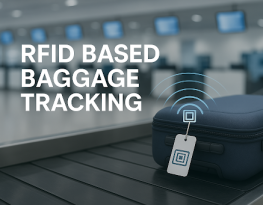
  3. Tracking: RFID readers placed strategically around the airport infrastructure read the tags, enabling real-time tracking of bag movement.
  4. Updates: Real-time information is synchronized with airport systems, notifying passengers and airline personnel of the status and location of the bag.

Why RFID Tags for Luggage Are a Game-Changer

1. Eradicate Lost Baggage

Lost bags are an international problem for travelers. An RFID instant bag tracking solution prevents bags from going missing, much reducing the potential for bags being lost or missing.

RFID reduces mishandled bags by over 25%, with SITA’s Baggage IT Insights showing that it saves airlines millions annually.

2. Enhanced Bag Drop and Collection

RFID tags circumvent the manual barcode scanning process, accelerating baggage handling. Airports using RFID technology witness immediate reductions in waits and baggage claim waiting times.

3. Passenger Confidence and Security Enhanced

Passengers can track their bags via mobile apps connected to RFID systems, enhancing their control and transparency. For airport and airline management, RFID ensures higher security with audit trails and error-free information.

4. Operating Efficiency Enhanced

Automated scanning reduces reliance on labor-intensive methods. Scanning many bags simultaneously in bulk is now feasible.

5. Better Analytics for Airports and Airlines

With RFID tags, all bag journeys are recorded. This gives predictive analysis for baggage smoothing resource allocation, and demand planning. 

RFID Luggage Tag Applications in the Travel Industry

Airports and Airlines

Saudi Arabian and UAE airports are quickly adopting RFID systems to improve customer experience. In baggage check-in and recovery, RFID speeds up, becomes more transparent, and makes people accountable.

Luggage Manufacturers

Some smart luggage manufacturers are adding RFID tags to bags to give track-and-trace capability, a feature that will appeal to tech-savvy consumers.

Logistics and Freight Services

RFID helps logistics businesses ensure customer freight arrives at the right destination at the right time, optimizing last-mile delivery.

Benefits of Using RFID Bag Tags for Passengers

  • Real-Time Location: Track exactly where your bag is at any point in time.
  • No More Anxiety: No more concern about whether or not your bag was loaded onto the plane.
  • Quicker Reclaims: RFID technology enables quicker times to recognize and reclaim bags.
  • Intelligent Integration: Most RFID-based solutions are integrated into airline mobile applications for real-time alerts.
  • Perception of Safety: Travel safe, knowing your valuables are monitored at all times.

RFID vs Barcode: Why RFID Reigns Supremacy

The conventional barcode-based baggage systems have been operational in airports and airlines for decades. They are preceded by a range of disadvantages, such as the fact that they are line-of-sight dependent, breakable, and have low data storage capacities. RFID addresses all these disadvantages since it allows:

  • Non-line-of-sight reading
  • Reading of large numbers of bags at once
  • Enhanced resistance to handling and durability
  • Increased data storage capacities
  • Less manual handling and scanning errors

The improved efficiency of RFID tags on luggage makes them the better, smarter option for today’s travel need.

Using RFID Tags in Saudi Arabia Airports

Saudi Arabia, its thriving tourism sector, and international tourists make it a forward-thinking nation regarding airports. Putting RFID tags labels on key airports like Riyadh, Jeddah, and Dammam will bring the nation’s airport status in the world to another level.

As Saudi Vision 2030 moves forward with additional digital transformation initiatives, RFID is well-suited in the national intelligent transportation systems and smart cities platform. Learn What Is RFID Baggage Tracking and How Does It Work here.

Thoughts on RFID for Baggage

  • Compatibility: Design RFID systems in a way that they can be seamlessly integrated into existing airport management software.
  • Durability: Design RFID tags to be strong enough to withstand rough handling, pressure, and temperature variations.
  • Privacy Compliance: Employ data encryption for protecting passengers’ data.
  • Reader Infrastructure: Install several high-quality RFID readers at several checkpoints to offer real-time data flow.
  • Training Staff: Train IT staff and ground staff for ease of operation and maintenance.

Industries That Benefit from RFID Luggage Tags

Aviation is the largest industry, but a few others benefit as well:

  • Hospitality: Hotels that offer airport transfers follow customer luggage from arrival through in-room delivery.
  • Luxury Travel: Tour companies offer white-glove RFID-tagged baggage handling.
  • Business Travel: Corporates are provided executive baggage on time and in a secure manner.

The Future of Smart Travel Starts Now

RFID bag tracking is not just a trend, it’s a leap towards smarter, faster, and more secure travel. As travelers demand greater convenience and security, RFID tags for bags are a technology-driven solution that works in the interests of airports, airlines, and passengers.

From loss minimization to processing efficiency, RFID technology is the travel industry’s much-awaited game-changer.

Travel Smarter with RFID Luggage Tags

RFID tags in bags are a crucial element of air transportation tomorrow. The RFID baggage tags are revolutionizing tracking, security, and handling of bags, making journeys smoother, safer, and smarter.

If you are a travel agency, airport, or airline of Saudi Arabia and want to improve your facilities of baggage tracking, it’s the time to invest in smart RFID solutions. 

Partner with Acube Infotech for Smart RFID Travel Solutions

At Acube Infotech, we offer cutting-edge RFID solutions customized precisely to the specific requirements of the travel and logistics industry. Our RFID bag tracking solution is designed to optimize airport efficiency and improve the passenger experience across the Kingdom of Saudi Arabia.

Join forces with us and shape the intelligent travel future together.

Contact us today to learn more about our RFID solutions and RFID Luggage Tracking Devices.
BENEFITS AND FEATURES

  • Delivers highly genuine read rates of over 99% without human intervention both at departure and arrival points.
  • RFID luggage tags and readers don’t prompt a line of sight.
  • Substantial savings on operational costs as its tracking cost is less as compared to barcode systems.
    RFID luggage tags can be scanned from meters away.
  • Ideal solution for suspected baggage tracking by employing automated RFID baggage tracking eliminates manual toil thereby the operational costs.
  • Simple and cost-efficient scan points can be installed.
  • Improves efficiency by reducing baggage mishandling hence minimizing the cost of mishandled baggage.
  • Our modern RFID readers can read RFID luggage tags although they are folded, wet, or facing from an incorrect side yields an accuracy of 99%, contrary to barcode tags.
  • Customers will get notified of their baggage on and off the aircraft by message alerts.
  • Quick inventory and tracking down of single luggage is made easy by RFID baggage tracking.

PRODUCTS USED

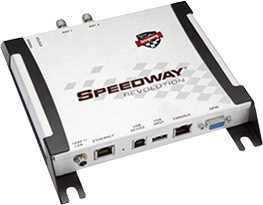
IMPINJ R220

IMPINJ R220

Location and global and detailed vision of your location at every moment.

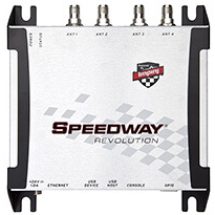
IMPINJ R420

IMPINJ R420

Location and global and detailed vision of your location at every moment.

IMPINJ XSPAN

IMPINJ XSPAN

Location and global and detailed vision of your location at every moment.