
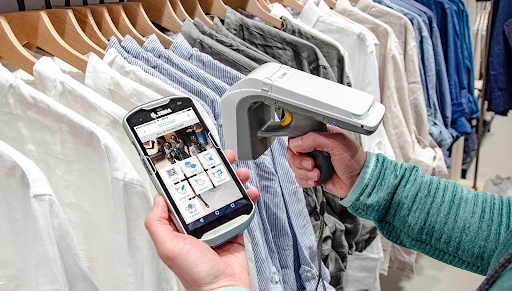
How to Reduce Retail Out-of-Stocks with RFID
The ability to keep inventory at the right levels is a key factor in the success of any business, especially in the retail world of fierce competition that we have today. The absence of goods on the shelves does not only mean that sales are lost, they also have a negative impact on the company’s brand reputation, customer loyalty, and even the efficiency of the business’s operations. Researches demonstrate that retailers are losing almost 4% of their yearly sales due to stock outs, which, however, can be avoided in most cases by using smarter technology.
RFID (Radio Frequency Identification) is one of the most effective solutions that is leading this change. With the help of RFID Retail Inventory Management, retailers will be able to observe stock levels in the most efficient manner, optimize supply chain operations, and at the same time, make sure that products are always available for customers when they wish to purchase them.
What if we consider the possibilities that would open by using RFID technology to solve the problem of out of stocks and to raise inventory performance?
1. Understanding the Retail Out of Stock Challenge
Out of stock can happen because inventory counts are wrong, restocking is slow, store visibility is bad or communication between supply chain points is delayed.
Common reasons for out of stocks include:
- Inaccurate manual inventory tracking
- Slow restocking or replenishment
- Poor demand forecasting
- Hidden stock in backrooms or warehouses
- Lack of real time visibility across retail locations
Such problems result in dissatisfied customers, loss of sales, and decreased productivity. Actually, today’s buyers demand immediate availability; otherwise, if they fail to get what they need, they will simply turn to other companies.
2. The Role of RFID in Retail Inventory Management
RFID Retail Inventory Management entails the implementation of tiny electronic tags that are capable of storing certain data regarding products. These tags interact with RFID readers through radio waves, thus enabling the identification of items very fast and accurately, however, there is no need for line of sight scanning as in the case of barcodes.
Every product carries a singular RFID tag that holds the information of the product such as the SKU, size, color, and the batch number. Once the RFID readers scan the tags, the system is able to update the inventory records on the spot and in real time.
Such an extent of automation offers a continuous, 360 degree insight into the stock movement from the warehouse to the store shelf, thus giving the retailers the opportunity to make the right decisions, be able to restock faster and reduce the number of manual errors.
3. How RFID Helps Reduce Retail Out-of-Stocks
- Real Time Inventory Accuracy
One of the major benefits of RFID is inventory accuracy.I think the conventional inventory system has an accuracy rate of about sixty to seventy percent whereas the RFID system can reach as high as ninety‑eight, to ninety‑nine percent accuracy. I think retailers will always be able to track the products that’re in stock, the location of those products and the time required to replenish those products.
- Faster Replenishment from Backroom to Shelf
In many cases, products can be found in the store but not on the sales floor. The staff may not know what is in the backroom, or the inventory may be misplaced because of manual processes.
By implementing RFID technology, the whereabouts of all the products become known at all times, and hence the employees are able to figure out what products are missing and consequently replenish them. It is certain that the products will be moved from the storage room to the selling area so that customers are not kept waiting for their products.
- Automated Reordering
With RFID Retail Inventory Tracking, retailers have the option to make reordering automatic as per the preset stock levels. It is possible for the system to automatically generate purchase orders or internal transfers if the quantity of an item falls under a certain level. In this way, the company stays ahead of the game in terms of stocking and guarantees the continuous availability of products.
- Improved Supply Chain Visibility
RFID technology is not only good for stores, but it also makes the whole supply chain more efficient. Basically, RFID is giving you the real time location of a product all along the way, from when it is shipped out of the factory until it is delivered to the store shelf.
Retailers are able to keep track of product flow, find bottlenecks, and deal with the postponements that come before the lack of availability. Thus, this total visibility system is instrumental in preventing overstock, stockouts and inventory inefficiency in general.
- Enhanced Demand Forecasting
Timely and precise inventory data allows retailers to conduct trend analyses and demand forecasting in a much more efficient way. Based on sales patterns and customer behavior, companies can have more impact on procurement and stocking as well as their marketing strategies to guarantee that they supply the appropriate products not only at the correct places but also at the right times.
- Omnichannel Integration
Contemporary retail is not only confined to brick and mortar stores. People buy products through the internet, collect their orders at the store, and want a smooth interaction to be available to them on all channels. RFID is an omnichannel platform suitable technology that helps in maintaining uniform and precise inventory records of stocks both in store and online. As a result, “click and collect” operations can be trusted which is a way to lower the chances of goods being sold twice or orders left unfulfilled.
4. Case Example: How RFID Reduces Out of Stocks in Action
Just think of a fashion retailer that has to manage thousands of SKUs in different branches. The workers were using barcode scanning for inventory counting, which was a very slow process and took a lot of hours, and as a result, there were often discrepancies.
By implementing RFID Retail Inventory Management:
- The retailer reached 99% stock accuracy within the very first month.
- Restocking on a daily basis was turned into a fully automated process, thus the retailer was able to save the hours that were previously used for manual labor.
- The number of products that were out of stock was reduced by as much as 30% in the first quarter.
- The customer satisfaction scores went up as products were always available.
This is a great example of how RFID technology can not only be an instrument in minimizing operational errors, but it can also be a powerful tool in changing the whole retail experience.
Conclusion
Out of stocks have been a major problem for the retail industry for quite some time, but with the help of RFID technology, retailers are now able to get rid of them. The implementation of RFID Retail Inventory Management allows companies to have complete clarity, to automate, and to have full command over their inventory thus making it a guarantee that products will be available at the time when customers will need them.
It is a reality where each sale and each customer matters that RFID technology should not be considered as just a technological improvement but rather as a business leverage.