
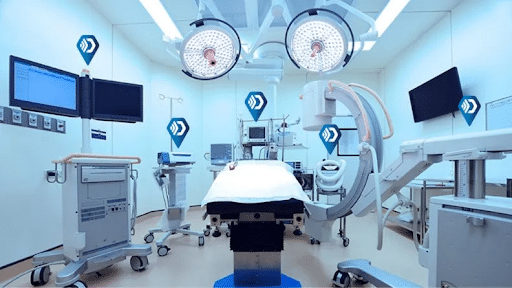
How Saudi Hospitals Are Cutting Equipment Loss by 30% with RFID Asset Tracking
Healthcare facilities all over Saudi Arabia are now faced with tighter budgets and demanding standards for promoting better patient care while at the same time doing more with less through operating overhead reduction, productivity improvement as well as a use of valuable medical resources. Hospitals depend on thousands of mobile devices every day from infusion pumps and wheelchairs through portable ultrasound machines to ventilators. Misplaced, underutilized or stolen equipment remains a major source of financial and operational pain.
To avoid this issue, numerous healthcare organizations are installing RFID Asset Tracking systems to achieve real time visibility of medical equipment & staff and automate asset tracking leading to hospital efficiency. Across Saudi Arabia, hospitals are seeing as much as a 30 percent decrease in equipment loss after implementing RFID based tracking solutions.
The Growing Challenge of Equipment Loss in Hospitals
Hospitals in modern times have to deal with many costly medical resources that are dispersed in various departments, floors, or locations. Without proper tracking of such assets, hospital employees would waste considerable time searching for the equipment needed.
Among other problems associated with medical asset management in hospitals are:
- Misplaced or missing medical equipment
- Unauthorized movement of medical assets
- Manually inaccurate inventory information
- Failure to provide emergency equipment timely
- Too much expenditure on duplicate equipment purchases
- Lack of asset usage monitoring
- Insufficient preventive maintenance scheduling
In a large scale healthcare facility, the lack of even one piece of equipment may cause delays. That is why today’s Saudi hospitals choose RFID Asset Tracking solutions.
What Is RFID Asset Tracking?
RFID technology is used in conjunction with RFID tags and readers installed throughout an environment to automate identification and tracking of assets as it moves through that environment. We use RFID tags with the identification data attached to each medical asset. RFID readers placed in various locations collect tag data and communicate the new location into management software immediately.
RFID systems are dense, and unlike traditional barcode systems do not require line of sight. It means you can track multiple assets at the same time ideal in busy healthcare environments.
Most Hospital RFID Asset Tracking systems are bundled with advanced hardware and software.
- RFID tags link to medical devices
- Fixed or handheld RFID readers
- RFID antennas and gateways
- Centralized asset management software
- Real time dashboards and alerts
The repetitive method is built on enhancing vision and control of the belongings at your healthcare center.
Why Saudi Hospitals Are Choosing RFID Technology
However, since the launch of Vision 2030 initiatives Saudi Arabia’s healthcare sector is evolving towards modernization quite rapidly. Hospitals are aggressively investing in digital transformation, smart healthcare infrastructure and operational efficiency.
These goals are perfectly matched with the RFID technology those is helping hospitals:
- Improve patient care quality
- Reduce operational waste
- Enhance equipment availability
- Increase staff productivity
- Strengthen compliance and reporting
- Optimize medical asset utilization
As smart hospital investments grow across Riyadh, Jeddah, Dammam and beyond into a national platform strategy for RFID adoption.
How RFID Asset Tracking Reduces Equipment Loss
1.Real Time Equipment Visibility
List of Benefits Of RFID Asset Tracking with DetailsOne of the prime benefits is real time location tracking. Centralized dashboards allow hospital staff to quickly find needed equipment.
Able to save staff time by skipping sending messages and searching all across departments, they quickly know:
- Current asset location
- Last movement history
- Assigned declaration keeper for the asset
- Equipment availability status
This significantly decreases lost assets and optimizes overall operational effectiveness.
2.Automated Movement Monitoring
RFID tracks the movement of an asset from one department in a hospital to another automatically. This means that each time tagged equipment goes through the RFID checkpoints, this status is updated on a real time basis.
Alerts can be set up by hospitals on:
- Unauthorized equipment removal
- Assets leaving designated zones
- Equipment entering restricted areas
- Missing or inactive devices
This advanced level of monitoring dramatically reduces both theft and the loss of tools by accident.
3.Better Asset Utilization
If existing equipment is not able to be quickly located, this leads many hospitals to unknowingly purchase duplicate items of equipment. RFID systems deliver accurate asset usage data which alerts management to underused or idle equipment.
With improved visibility, hospitals can:
- Share equipment efficiently across departments
- Reduce unnecessary purchases
- Improve return on investment
- Optimize procurement planning
This is directly tied to cost savings and improved efficiency within an operation.
4. Faster Equipment Audits
Manual audits take so much time that they rarely yield correct results. Auditing of the assets using RFID makes it possible for hospital staff to read hundreds of them in minutes.
Benefits include:
- Reduced labor costs
- Faster inventory verification
- Improved data accuracy
- Simplified compliance reporting
Organizations can create on demand reports and maintain proper asset tracking in a nondisruptive environment.
5. Improved Preventive Maintenance
To ensure patient safety and comply with the applicable regulatory requirement, medical equipment is to be regularly maintained Calibration. Hospitals use RFID systems to help monitor how assets are used as well as service schedules for maintenance tracking.
Automated reminders ensure:
- Timely preventive maintenance
- Reduced equipment downtime
- Better compliance with healthcare standards
- Extended equipment lifespan
Such enhancement contributes to the operational reliability as well as patient safety.
Real World Impact in Saudi Hospitals
RFID Asset Tracking solutions are helping hospitals improve operations in ways that can be quantified, including:
- Reduction in Equipment Loss by Completion of 30%
- Faster equipment retrieval times
- Increased asset utilization rates
- Reduced manual workload for staff
- Lower operational and procurement costs
- Improved emergency response readiness
These advantages are particularly crucial in big health centers where lots of equipment needs to be elevated as well as asset exposure is necessary.
Key Hospital Assets Commonly Tracked with RFID
In Saudi Arabia, RFID systems are being implemented in healthcare institutions to track all kinds of medical devices like:
- Wheelchairs
- Infusion pumps
- Defibrillators
- Portables ventilators
- ECGs machines
- Hospital beds
- Oxygen tanks
- Ultrasound systems
- Surgical tools
- Portable diagnostic systems
Real time tracking of such assets will help improve asset availability and healthcare delivery effectiveness.
Why RFID Is Better Than Traditional Barcode Tracking
While bar codes have been widely employed in the healthcare industry, there are a number of shortcomings associated with their use when compared with RFID systems.
Advantages of RFID Technology over Bar Codes :
- Line of sight scanning is not necessary
- Multiple items can be tracked at the same time
- Quicker and more efficient tracking
- Automated real time tracking
- Less likelihood of human error
- Scalability
For a hospital handling thousands of items on a day to day basis, RFID is an infinitely better option.
The Future of Smart Hospitals in Saudi Arabia
RFID technology will continue to play a significant role in hospital operations as Saudi Arabia spends on healthcare modernization. Integrated systems that combine RFID, IoT and cloud enabled analytics are being used by smart hospitals to enhance patient care as well as operational visibility.
It will become a mainstream in future ready healthcare facilities to utilize RFID for:
- Asset tracking
- Patient tracking
- Staff identification
- Pharmaceutical management
- Surgical instrument tracking
- Smart inventory management
And this digital transformation is enabling hospitals to establish more secure, smart and efficient healthcare environments.
More specifically, lack of efficiency in terms of asset management and equipment loss when left unchecked can severely affect hospital operations, patient care quality as well as financial performance. Saudi hospitals are boosting equipment visibility, reducing losses and improving operational efficiency with next gen Hospital RFID Asset Tracking solutions.
RFID technology with real time tracking, notifications and precise asset utilization data will help hospitals streamline their processes while reducing cost. With smart hospital projects in Saudi Arabia expected to keep growing, RFID will remain an important technology for modern healthcare asset management.
The RFID solutions designed for hospital environments are utility grade, highly reliable and can be scalable to assist businesses focused on improving healthcare operations.